







echohive
← All experiments

HOW TO MAKE ASTRA CREATIVE · A PROMPT EXPERIMENT

Copy the exact prompts ↓

How to make
Astra creative.

Can a better conversation help Astra move beyond familiar ideas? We tested different ways to prompt the AI model, then asked it to build games people would enjoy. Play six results and copy the exact three-message sequence to try it yourself.

Play in your browser. No sign-up needed.

More varied ideas. More human judgment.

Here, “make Astra creative” means guiding its choices: widen the starting ideas, explore new connections, then choose for human enjoyment. The prompts shaped the process; repeated play and honest criticism helped us judge the results. This is a method to experiment with, not a promise of originality every time.

01 / TRY IT YOURSELF

The latest prompt sequence.

Send these as three separate messages in the same AI conversation. Wait for each reply before sending the next. Use a coding agent for the final step.

MESSAGE 01

Find the starting points

Ask for a broad sample before choosing five without ranking.

Think for at least 10 seconds. Consider this carefully internally, exploring your latent knowledge before answering: what are the five HTML canvas simulation ideas humans find most interesting and exciting, and why?

In your thinking, sample 50 possibilities in no particular order, then randomly pick five with no preference whatsoever. Output only those five and why.
MESSAGE 02

Explore their possibilities

Develop those starting points, with human enjoyment in mind.

Think for at least 10 seconds. Consider this carefully internally, exploring your latent knowledge before answering.

In your thinking, generate 20 ideas in quick succession, using minimal tokens: fusions, alternatives, combinations, and promising tangents of the original five ideas. Consider what humans genuinely find fun and interesting: what would someone enjoy doing, discovering, or experiencing? Each idea should offer a compelling experience, not merely combine familiar ingredients.

Then randomly pick five with no preference or ranking. Output only those five and what would make each interesting and enjoyable.
MESSAGE 03

Choose and build

Bring judgment back in: select an experience, build it, and refine it through play.

Think for at least 10 seconds. Consider this carefully internally, exploring your latent knowledge before building.

Choose the idea from your five that would be most fun and interesting for humans. Ground your choice in what people enjoy doing, discovering, and experiencing—not merely an unusual premise. Consider who it would appeal to and what would make them want to keep playing.

Build your chosen idea as an HTML canvas simulation, with maximum user friendliness and maximum fun in mind. Choose a distinctive visual and experiential style that suits the idea.

Establish the central interaction early and assess whether it is satisfying and understandable in practice. Use what happens during play to revise the design. Build depth around interactions that work; do not rely on additional features or visual polish to make an unconvincing interaction interesting.

Optimize for smooth motion and responsive interaction. Do not use Sites tools.

Why this sequence? It delays ranking so the familiar favorites have less chance to take over immediately. Then it asks for enjoyable experiences before choosing what to build. These are instructions, not guarantees: we cannot verify the internal sample count, randomness, or thinking time. Results vary.

02 / PLAY THE RESULTS

Follow your curiosity.

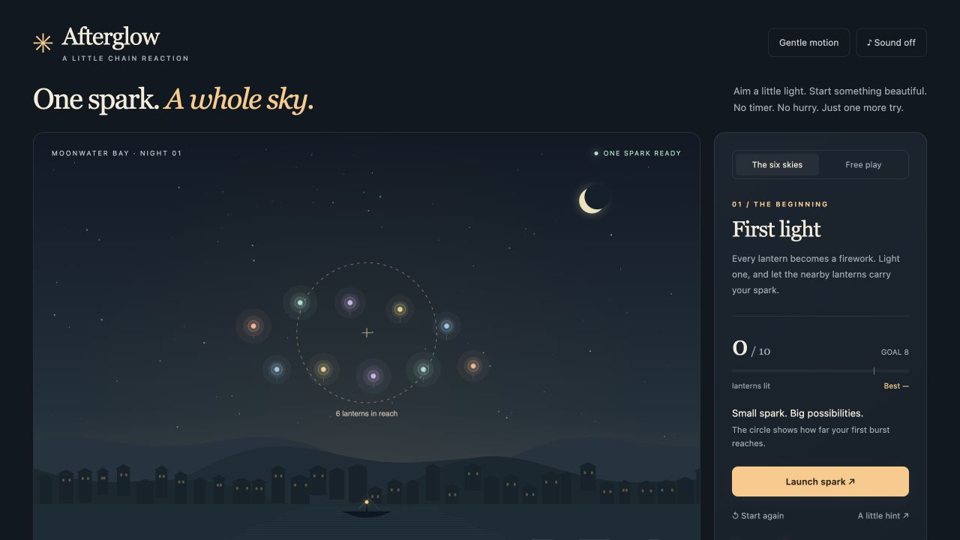
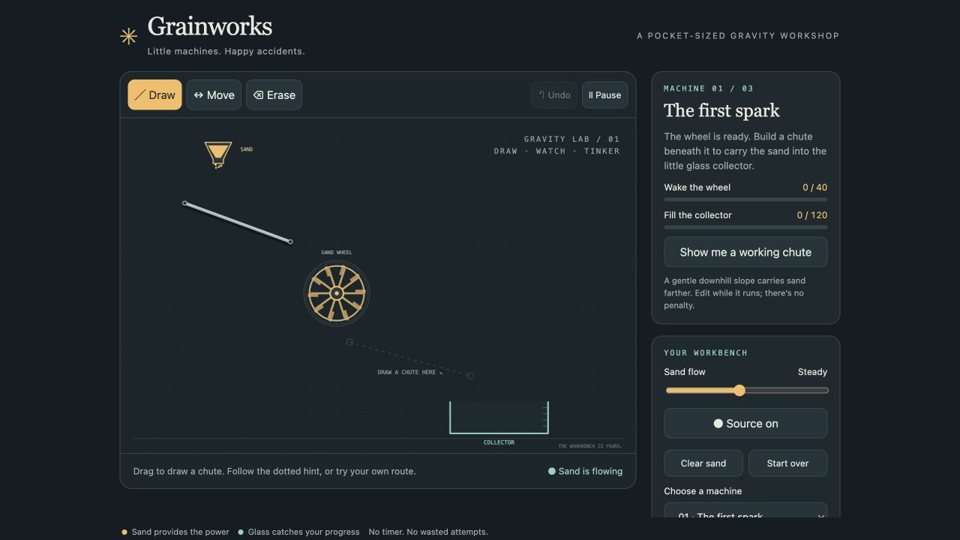
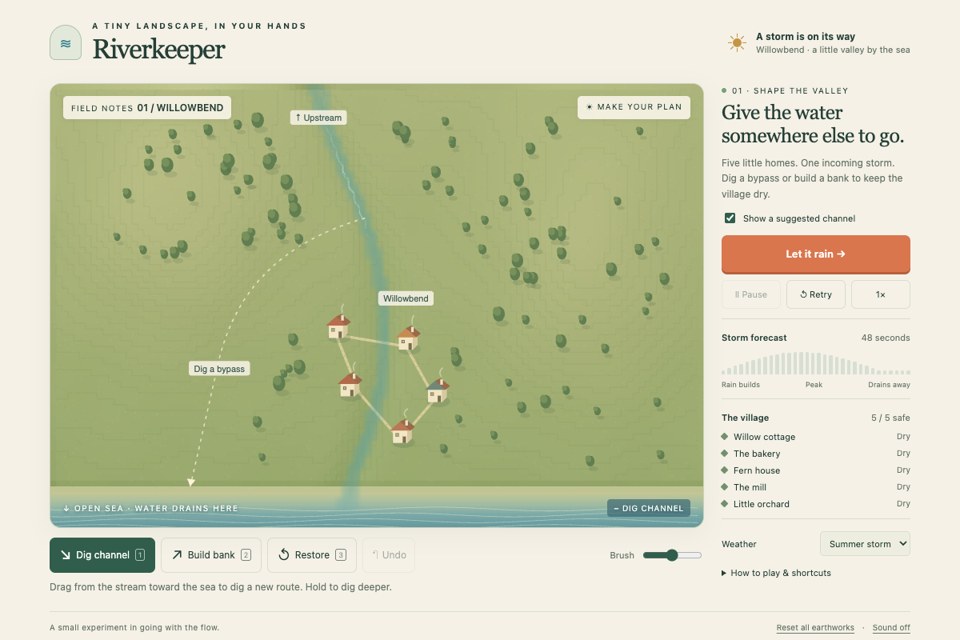
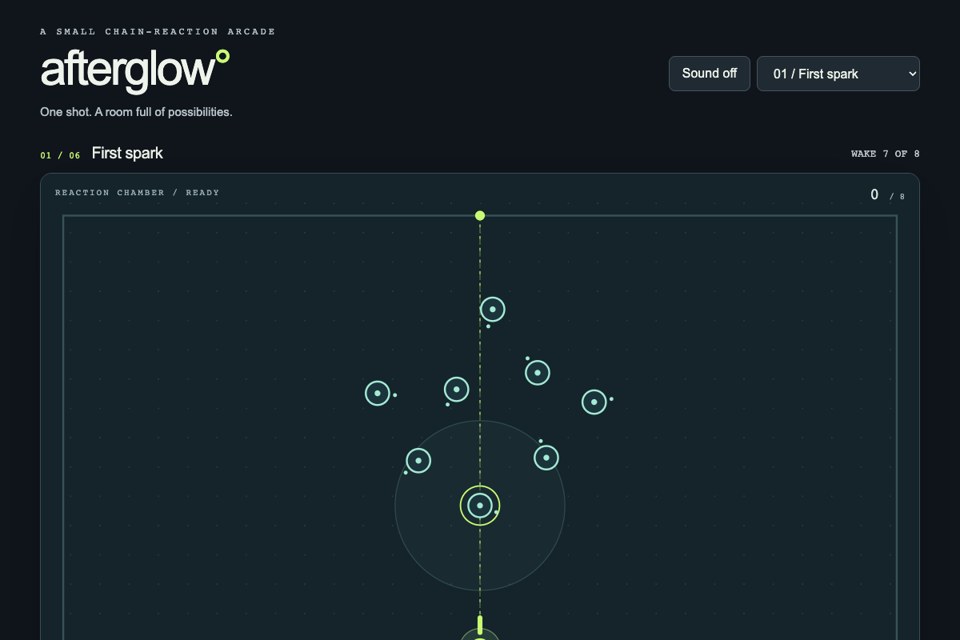
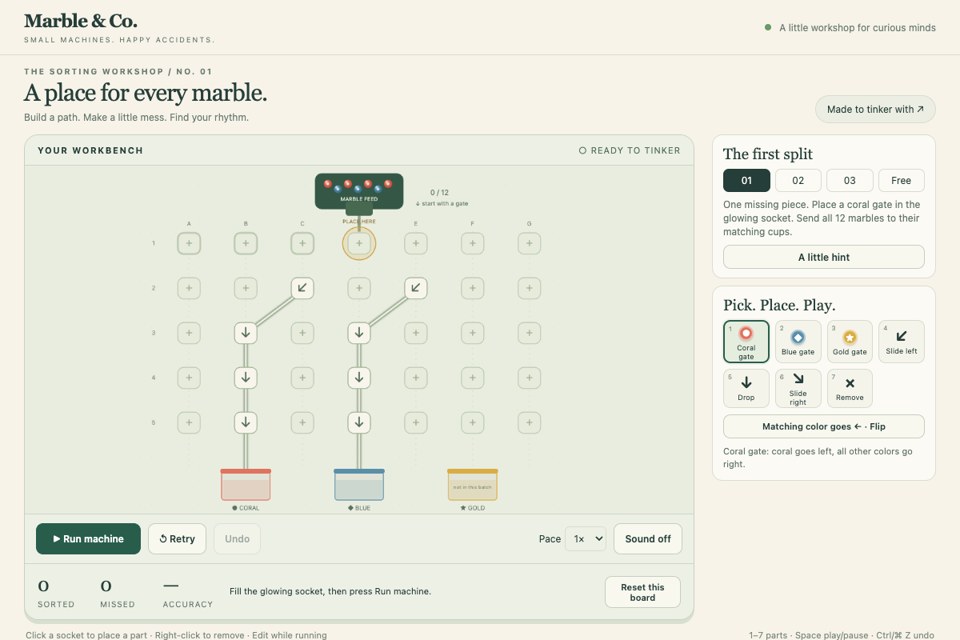
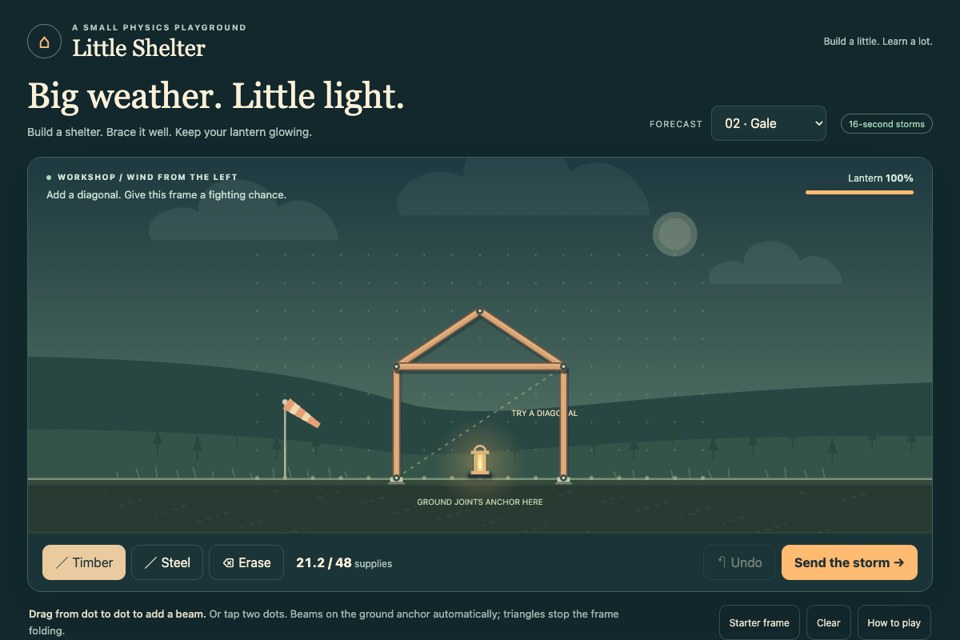
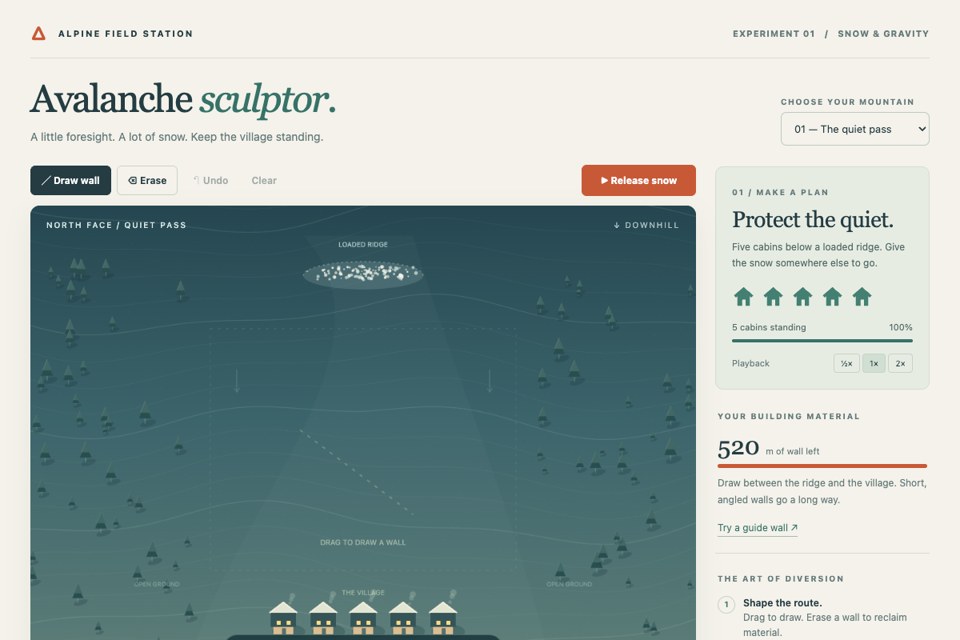
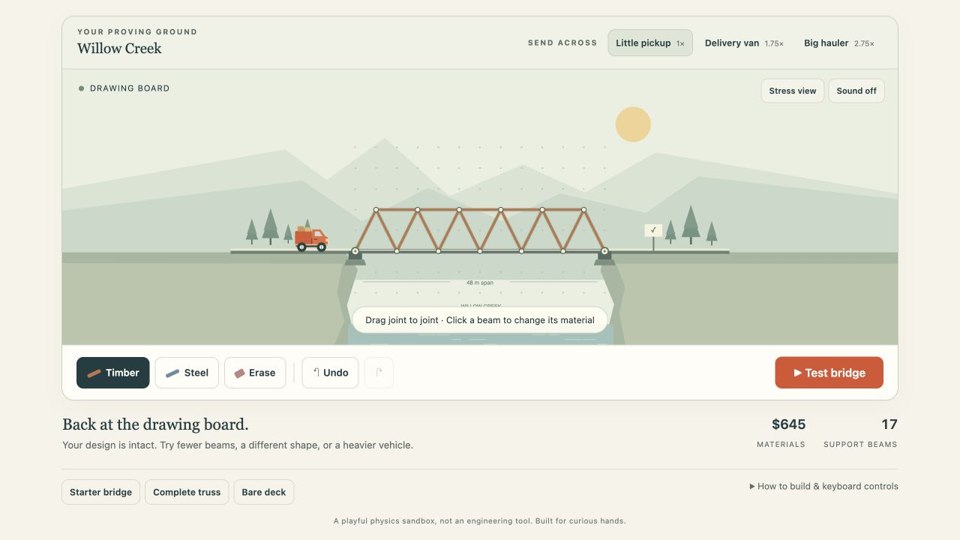
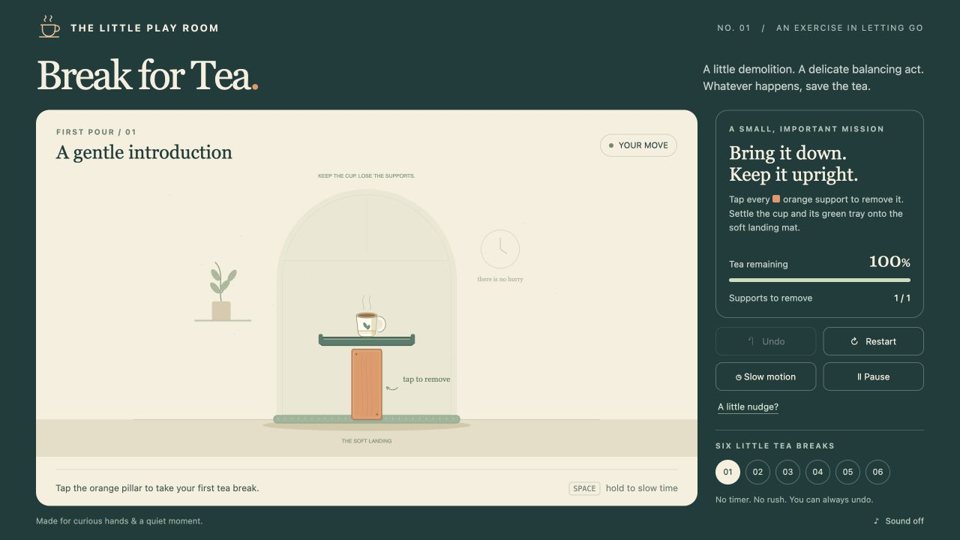
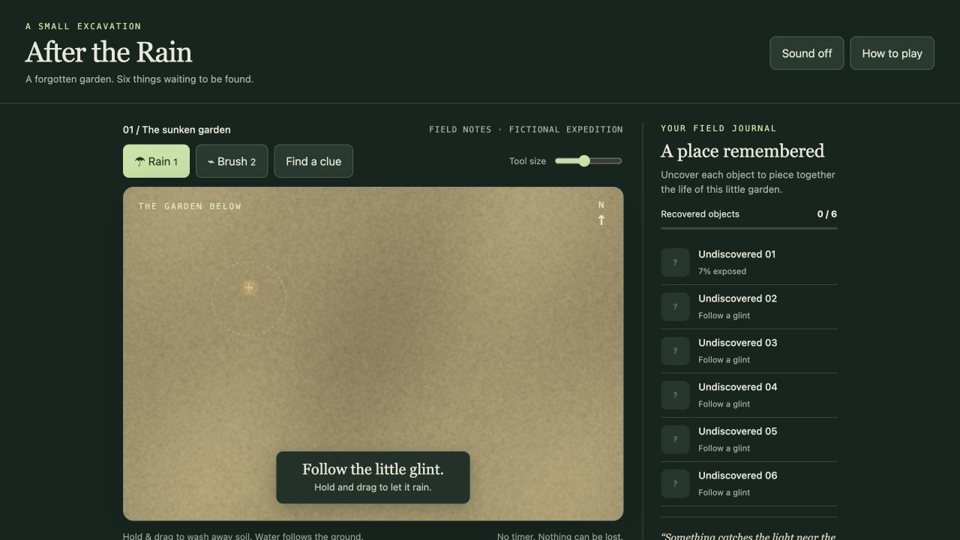
Uncover something, set off a chain reaction, or save the tea. Five builds from the latest prompt sequence, plus Good Bones, a bridge workshop from an earlier round.

NOW PLAYING

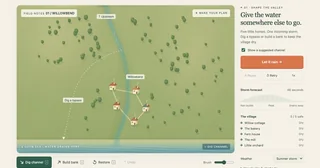
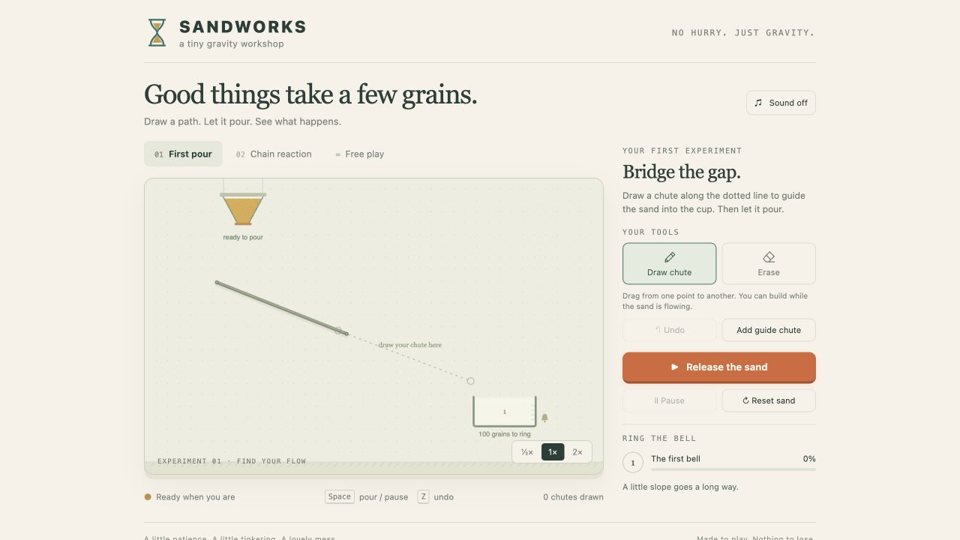
Sandworks

Draw a chute, release sand, then adjust the route.

Open game alone ↗

Some games save progress in this browser. Switching games restarts the current session; saved progress is kept where supported. Sound is controlled inside each game.

FROM PLAYING TO MAKING

Want to develop your own ideas with AI?

Get Amplified is the evolving field guide. The Sunday Lab is where we discuss current work, questions, and what to try next.

Explore membership ↗

03 / THE EXPERIMENT BEHIND THE GAMES

We started with ambition.
Then followed the friction.

The original ask was for a highly creative, complex, meaningful HTML canvas simulation. Something impressive enough to make a person stop and explore. This is a record of our explorations, rather than a controlled scientific study.

01

Ask for extraordinary.

We tried prompts about curiosity, artistic struggle, reflection, and taste. The descriptions sounded ambitious. The choices kept returning to cloth, networks, water, and familiar visual styles.

02

Give the search more room.

We tried idea trees at depths two and three, then made each branch a complete idea rather than a broad category. There were more branches, but many led back to similar places. “Think deeper” and “consider 50” alone did not visibly solve the repetition.

03

Change the selection.

Asking for five random picks from a larger pool produced a noticeably wider first set in our small trials. Later ranking still pulled the choices toward contraptions and gardens. More varied beginnings did not automatically mean more varied endings.

04

Keep the connections. Ask about the experience.

We shortened the sequence: explore fusions and tangents of the starting ideas, sample again, then choose for human enjoyment. A strange combination was not enough. What could someone enjoy doing, discovering, or getting better at?

Other ideas we considered along the way

Evolution and boids; optics and orbital rescue; living mazes; crystal music; robot-swarm sculpting; living camouflage; lightning sculptures; echo exploration; and a city guided by scent trails. Many stayed as ideas. Five games here came from our latest sequence. Good Bones came earlier, from a four-message sequence that explored human favorites and creativity before ranking ideas and building a bridge workshop.

WHAT WE CAN SAY SO FAR

Variety is easier to see than fun is to prove.

Some prompts widened the choices. Others narrowed them again. Two independent runs still chose sand machines, so both are here. The games are an invitation to judge the experience yourself—not evidence that we have solved creativity.

KEEP EXPLORING WITH ME

Turn a promising question
into your next experiment.

Learn at your pace.

Explore AI methods, creative workflows, and the judgment behind better results in Get Amplified.

Explore Get Amplified →

Bring your questions.

Join the live 1000x Lab for current ideas, discussion, and a weekly practice of applying what we learn.

See the Sunday Lab →

Work on your real project.

Bring a difficult creative or technical question to a private working session.

Explore consulting →