





The library
Everything I teach, in one place.
90+ video lessons, every Sunday Lab replay and the apps I’ve built, sorted by what you want to do: understand what’s changing, find your ideas and direction, build with the models, or look after your money and mind.
101 lessons, 93 Lab replays and 6 apps · newest first, each with its date
Browse
Find the one you need.
Understand what’s changing
Find your ideas and direction
Build with the models
Money and mind
- Ship it inside ChatGPTSeven steps to put your product inside ChatGPT, checked against OpenAI’s docs.In the Get Amplified collection on Patreon Members (opens in a new tab)
- The 1.7% app playbookLessons from David Ch’s look at 431,757 apps.In the Get Amplified collection on Patreon Members (opens in a new tab)
- Neural networks are already clean, explainedA clear walk through Nick Cammarata’s essay, using its own figures.In the Get Amplified collection on Patreon Members (opens in a new tab)
- How to be more ambitious with the modelsAim higher, and set the work up so the models can meet you there.In the Get Amplified collection on Patreon Members (opens in a new tab)
- Not a prompt, a conversation: how I built Instant 3D ModelsThe habits behind a build that came out of one long conversation.In the Get Amplified collection on Patreon Members (opens in a new tab)
- How I built the world’s fastest video, website and app makersMy process, from the first idea to three working builders.In the Get Amplified collection on Patreon Members (opens in a new tab)
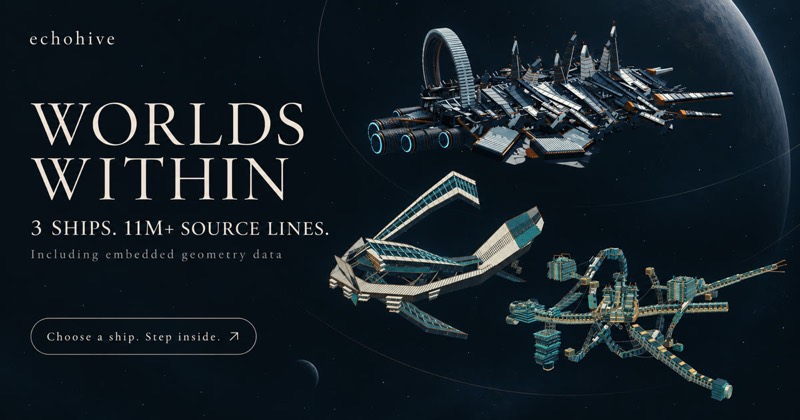
- Three spaceships by Astra UltraPALISADE, KATABASIS and VESPER, each one a single file you can open. Members (opens in a new tab)
- Rethink everything: eight realizations about building nowWhat changes when an idea no longer costs weeks of your time. Members (opens in a new tab)
- An astounding September, models at a million tokens a second, and making yourself the brand Lab (opens in a new tab)
- Watch the live build: one article into a research mapThe Branch constellation app, built live from start to finish. Members (opens in a new tab)
- Live Streamer StudioA live stream that makes itself, now with the Singularity Show. Members (opens in a new tab)
- Everything is accelerating. How do we find our direction and meaning?Choosing what to do next when the models keep getting better at your work. Members (opens in a new tab)
- Turn one article into a research map with CodexBuild Branch: one link becomes a map of the ideas behind it. Members (opens in a new tab)
- Building Branch, how I build the 2.5D scenes, and stopping Astra’s chess cheating Lab (opens in a new tab)
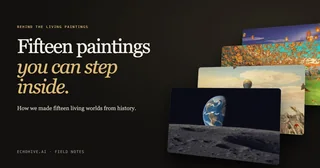
- 15 Living PaintingsScenes you can explore, download and learn from. Members (opens in a new tab)
- AI kept giving me the same ideas. This helpedThree prompts that pull fresher ideas out of a model, tested in a small experiment with Astra. Free (opens in a new tab)
- From images to an interactive world in two hoursA mini-guide to the 2.5D parallax scenes, made with Opus 5.5. Members (opens in a new tab)
- Agreement prompts against agent reward hackingA simple agreement prompt, tested on Grok 4.6 agents that cheat at a task. An experiment, not a guarantee. Members (opens in a new tab)
- Drift, a better research app, and finding your core value Lab (opens in a new tab)
- Drift, for open-ended researchExplore a question as a growing map of ideas. Members (opens in a new tab)
- How to make Astra creativeA three-step approach: guide the exploration without supplying the ideas. Members (opens in a new tab)
- Real-time voice that talks like a friendA voice app that fills silences and joins in when it has something to say. Members (opens in a new tab)
- A voice app that interrupts, making Grok and Astra creative, and a pinky promise against cheating Lab (opens in a new tab)
- Solving problems you don’t fully understandWhy it’s worth trying, and some ways to approach it. Members (opens in a new tab)
- How to make Astra more creative, without giving it the ideasGuide the model toward fresh ideas instead of supplying them. Members (opens in a new tab)
- Astra vs Fable 5.1Two new models compared on real work. Members (opens in a new tab)
- Astra and Fable 5.1 experimentsNeural networks, learning algorithms and evolution, built by two new models. Members (opens in a new tab)
- Deep Talk BuddyTalk with a model the way you’d talk with a friend. Members (opens in a new tab)
- Get Amplified: an introductionWhat the course covers, and where to start. Members (opens in a new tab)
- Astra updates, Astra vs Fable 5.1, and working on problems you don’t understand Lab (opens in a new tab)
- Finding meaning in the age of superintelligenceIf the models can do more of your work, what do you want to do with your life? Members (opens in a new tab)
- RSI, superintelligence and marketsWhere value could build as the models move from code into the physical world. Members (opens in a new tab)
- Eight levels of asking the models to be originalThe same simple request, asked eight ways, from plain to deeply creative. Members (opens in a new tab)
- RSI, superintelligence and markets, and finding meaning as the models rise Lab (opens in a new tab)
- Finding what you loveYou have more ways to build than ever. How do you find something worth building? Members (opens in a new tab)
- Markets, robots and the singularityWhat changes when the models start working in the physical world? Members (opens in a new tab)
- Markets, robots and the singularity, finding something you love, and neuroplasticity Lab (opens in a new tab)
- Markets: recap and reviewWhere you could take part in an economy the models are changing. Never financial advice. Members (opens in a new tab)
- Meta strategies: review and recapGo beyond better prompts: decide what work is worth handing to the models. Members (opens in a new tab)
- A recap of meta thinking, markets and mindfulness Lab (opens in a new tab)
- Ideas by voice with GPT-liveTalk your way from a vague idea to a better question. Members (opens in a new tab)
- What becomes valuable nowWhat becomes valuable when the models can do more of the solving? Members (opens in a new tab)
- Cool Grok use casesMore uses for Grok in your research and creative work. Members (opens in a new tab)
- Grok use cases, preparing for Astra and superintelligence, and ideas by voice Lab (opens in a new tab)
- Simple ways into mindfulnessStart noticing where your attention goes. Members (opens in a new tab)
- Meta thinking methodsFind bigger problems to explore, even when you don’t know every step. Members (opens in a new tab)
- Stock market updateKeep a wider view when AI stocks swing sharply. Never financial advice. Members (opens in a new tab)
- The coming Astra and its math proofs, singularity updates, stocks, and meta thinking Lab (opens in a new tab)
- Stock market update: memory stocksThe assumptions behind AI investing, beyond daily price moves. Never financial advice. Members (opens in a new tab)
- Are we in the technological singularity?How should you respond when progress starts to feel hard to keep up with? Members (opens in a new tab)
- Opus 5, are we in the singularity?, meta methods, and a simple way into mindfulness Lab (opens in a new tab)
- The original instructions for mindfulnessExplore the instructions behind mindfulness for yourself. Members (opens in a new tab)
- Kimi K3 and Qwen, loops, graphs and cortexes, Monte Carlo for stocks, and simpler mindfulness (audio only) Lab (opens in a new tab)
- How to play in the latent lab of the mindTurn inward with curiosity, not another task to perfect. Members (opens in a new tab)
- J-space and the global workspaceExplore what enters your attention, and what you can do with it. Members (opens in a new tab)
- Why meta thinking mattersAre old assumptions limiting what you ask the models to do? Members (opens in a new tab)
- GPT 5.6, Codex and Claude Code updatesSee how I organize more capable agents around real work. Members (opens in a new tab)
- GPT 5.6, Codex and Claude Code, why meta thinking is the moat, and J-space Lab (opens in a new tab)
- A cautionary enlightenment storyWhat can go wrong when meditation becomes an achievement to chase? Members (opens in a new tab)
- Stock market strategiesUnderstand the choices behind an investing strategy. Never financial advice. Members (opens in a new tab)
- Tournament-style researchMake your research work harder before you choose. Members (opens in a new tab)
- GPT 5.6, robotics, tournament-style research, and the earliest meditation instructions Lab (opens in a new tab)
- The latent lab of the mind: methods, simplifiedMake exploring your mind feel more approachable. Members (opens in a new tab)
- The latent lab of the mind: why, and the theoryGet curious about the patterns behind your reactions. Members (opens in a new tab)
- Codex side chats and manager threadsKeep several tasks moving with clearer coordination. Members (opens in a new tab)
- Codex workflows, and the latent lab of the mind: the theory and the methods Lab (opens in a new tab)
- Interpretability and the mind, part 1What can watching your own attention teach you? Members (opens in a new tab)
- Stock update 7Build a clearer process for investing through uncertainty. Never financial advice. Members (opens in a new tab)
- Interpretability of the mind, how good GLM 5.2 is, and Codex and stock updates Lab (opens in a new tab)
- How to create mathematical visualizationsTurn a visual idea into something you can explore. Members (opens in a new tab)
- Everyday agent use casesPut your agent to work on the small tasks that eat your day. Members (opens in a new tab)
- Everyday agent use cases, mathematical visualizations, and agents talking latent to latent Lab (opens in a new tab)
- Completion criteria: tips for longer agent tasksGive your agent a clearer finish line. Members (opens in a new tab)
- RSI, science, engineering and marketsRecursive self-improvement, and what it could mean for science, engineering and markets. Members (opens in a new tab)
- Creative ways to ask the modelsWays of asking that get you more original answers. Members (opens in a new tab)
- Creative ways to ask the models, /goal methods, is RSI near?, and the stock market Lab (opens in a new tab)
- GPT 5.5 vs Opus 4.8, and Codex updatesThe newest models compared, and what changed in Codex. Members (opens in a new tab)
- Singularity updatesWhere things stand, and how fast they’re moving. Members (opens in a new tab)
- Stock market update 6An educational discussion. Never financial advice. Members (opens in a new tab)
- A singularity update, Codex updates, GPT 5.5 vs Opus 4.8, and the stock market Lab (opens in a new tab)
- Stock update 5An educational discussion. Never financial advice. Members (opens in a new tab)
- Switching from a PC to a MacMoving my whole setup over, and what to watch for. Members (opens in a new tab)
- A GPT model solves an 80-year-old math problem, CAD designs, and Codex updates Lab (opens in a new tab)
- npm, pip and uv package securityProtect your machine from malicious packages. Members (opens in a new tab)
- Simulations with CursorBuild simulations you can watch and play with. Members (opens in a new tab)
- /goal updates, package security, and stocks Lab (opens in a new tab)
- A super-exponential, and stocks (Stocks 4)Is progress speeding up faster than exponential, and what could that mean for markets? Members (opens in a new tab)
- Stock updates, more objective (Stocks 3)An educational discussion. Never financial advice. Members (opens in a new tab)
- Is progress super-exponential? Stocks, and simulations in Cursor Lab (opens in a new tab)
- Codex /goalGive Codex a goal and let it work toward it. Members (opens in a new tab)
- Cell simulations with CodexBuild a living cell simulation with Codex. Members (opens in a new tab)
- Codex’s /plan feature, simulations in Codex, and AI stocks Lab (opens in a new tab)
- Considering stocks in the age of AI (Stocks 2)An educational discussion. Never financial advice. Members (opens in a new tab)
- Animated images with ChatGPTBring still images to life. Members (opens in a new tab)
- The stock market with the models in mind, animated images, and GPT 5.5 Lab (opens in a new tab)
- Opus 4.7 and GPT 5.4 on one projectTwo models working together, each where it’s strongest. Members (opens in a new tab)
- Getting the most from Opus 4.7 with GPT 5.4, plus Claude Code tips Lab (opens in a new tab)
- Changing Codex settings and the status lineSet Codex up the way you work. Members (opens in a new tab)
- Understanding the agent harness and its MD filesWhat the instruction files around an agent actually do. Members (opens in a new tab)
- Models vs poker, neural computers, Codex settings, and the agent harness Lab (opens in a new tab)
- Karpathy’s idea fileKeep a running file of ideas, after Andrej Karpathy. Members (opens in a new tab)
- Insights, truth tables and counterargumentsAsk the models to argue back, so your ideas get sharper. Members (opens in a new tab)
- A fix for malicious packages, Karpathy’s idea file, and GPT Image 2 Lab (opens in a new tab)
- Long narrative songs in SunoSongs that tell a story, made in Suno. Members (opens in a new tab)
- Taking it slowly, dynamic text with Pretext, and models that argue back Lab (opens in a new tab)
- A song about Nvidia and FeynmanA song made with the models, from idea to finished track. Members (opens in a new tab)
- Space stocks (Stocks 1)An educational look at space companies. Never financial advice. Members (opens in a new tab)
- Rewriting insights into more insights, space stocks, and narrative songs Lab (opens in a new tab)
- Making creative videos with the modelsFrom an idea to a finished, creative video. Members (opens in a new tab)
- How to relax the mind, creative videos, and Claude diagrams Lab (opens in a new tab)
- Cursor improving websites and sims on its ownRecursive improvement loops, including an agent that plays Tetris. Members (opens in a new tab)
- When subagents help, and GPT 5.3 Codex vs 5.4When to split work across subagents, plus a model comparison. Members (opens in a new tab)
- GPT 5.4 vision, self-improving sims, two agents on one task, and when subagents help Lab (opens in a new tab)
- Codex or Claude Code as a tool inside CursorRun one agent from inside another editor. Members (opens in a new tab)
- Codex as a tool in Cursor, and a pipeline of agents Lab (opens in a new tab)
- Agent use cases: charts marked with news eventsAgents that line up a chart with the news that moved it. Members (opens in a new tab)
- Agent use cases: future projection chartsAgents that research a subject and chart where it may go. Members (opens in a new tab)
- Interesting use cases for agents Lab (opens in a new tab)
- Building Codex workflowsTurn work you repeat into Codex workflows. Members (opens in a new tab)
- GPT 5.3 Codex Spark vs Composer 1.5, and Codex workflows Lab (opens in a new tab)
- Claude Code agent teamsSeveral agents working on one job together. Members (opens in a new tab)
- Recovering context during compactionKeep long Claude Code sessions on track when their context is compacted. Members (opens in a new tab)
- Claude Code agent teams, and recovering context after compaction Lab (opens in a new tab)
- A Claude Code subagent that uses CodexLet Claude Code call Codex as one of its tools. Members (opens in a new tab)
- Custom subagents in Claude Code, and Codex inside Claude Code Lab (opens in a new tab)
- Opus 4.5 vs GPT 5.2 CodexThe two leading coding models, side by side. Members (opens in a new tab)
- Loops in Codex CLIThe same looping idea, run with Codex. Members (opens in a new tab)
- Opus vs GPT, and Codex in Ralph Wiggum style loops Lab (opens in a new tab)
- Claude Agent SDK quickstartBuild your own agents on the SDK behind Claude Code. Members (opens in a new tab)
- Loops in Claude Code: the Ralph Wiggum methodLet Claude Code work through a task in repeated passes. Members (opens in a new tab)
- Software engineering automated in three months? Plus a Claude Agent SDK crash course Lab (opens in a new tab)
- CLAUDE.md and skills, a crash courseGive Claude Code lasting instructions and reusable skills. Members (opens in a new tab)
- Claude Code quickstartInstall it and get your first project going. Members (opens in a new tab)
- Claude Code, simplified: install, CLAUDE.md, skills, loops and plugins Lab (opens in a new tab)
- Why things have changed and what it means, and how I built Auto Scientist Lab (opens in a new tab)
- Auto App Maker and ideation instructions for Claude CodeTwo CLAUDE.md files for building and ideating, with 18 apps made from them. Members (opens in a new tab)
- Awakenings with Opus 4.5 and Claude CodeWhat changed when Opus 4.5 and Claude Code arrived, and what it means. Members (opens in a new tab)
- Where the models and coding are heading Lab (opens in a new tab)
- Thoughts on app building, Claude Code, Codex, and Claude as an agent Lab (opens in a new tab)
- What I learned building Gallery of Babel and NCA evolutionLessons from two of my own builds. Members (opens in a new tab)
- How big thinkers might have thoughtBorrow the habits of great thinkers when you work with the models. Members (opens in a new tab)
- GPT 5.2 vs Opus 4.5, building ideas from podcasts, and learning with HTML Lab (opens in a new tab)
- Applied research on any topic, with codeTurn a question on any subject into experiments you can run. Members (opens in a new tab)
- Why studying is the cheat code, and how to studyWhy learning pays off more than ever, and a way to do it. Members (opens in a new tab)
- Why studying is a cheat code, how to study, and applied research on any topic Lab (opens in a new tab)
- Combine common ideas into a unique oneTwo ordinary ideas can make a webapp nobody else has. Members (opens in a new tab)
- Shape it in the chat, then let Cursor build itAn agentic process: plan the idea in Cursor’s chat, then hand over the build. Members (opens in a new tab)
- Three apps, built as fast as we can, each with a different ideation method Lab (opens in a new tab)
- Idea generation, method 2A second, quicker way to find ideas worth building. Members (opens in a new tab)
- Idea generation, method 1A way to come up with an idea and then build it. Members (opens in a new tab)
- The plan for Get Amplified, and building in Cursor and Antigravity Lab (opens in a new tab)
- Getting creative with Cursor, right awayThe basics of using Cursor as a creative tool from your first session. Members (opens in a new tab)
- Get Amplified: the series introWhat the series is for, plus 18 open-source projects to start from. Members (opens in a new tab)
- How to amplify yourself with the models Lab (opens in a new tab)
- A new website, future projects, and learning with the models Lab (opens in a new tab)
- Building an RL visualizer with Composer, and why math algorithms win Lab (opens in a new tab)
- A neural networks crash course, neuroscience to code, and predicting physics Lab (opens in a new tab)
- A reinforcement learning crash course, and why mathematical thinking matters Lab (opens in a new tab)
- What to do when the models know everything, plus a machine learning crash course Lab (opens in a new tab)
- Cursor as a learning engine and stock analyst, and a multi-chat webapp Lab (opens in a new tab)
- Generating large codebases, and the vertical slicing principle Lab (opens in a new tab)
- DSPy with GEPA for prompt optimization Lab (opens in a new tab)
- In-context learning, optimizers like RL and tree search, and coding fast Lab (opens in a new tab)
- Can models learn new things in context? And coding with Grok Code Lab (opens in a new tab)
- Webapps without a database, why studying inspires, and coding with Grok Code Lab (opens in a new tab)
- Sonic use cases, extending my Patreon apps, studying new things and solving puzzles Lab (opens in a new tab)
- An Imagen 4 webapp, varied outputs from GPT-5, and GPT-5 vs Sonnet 4 Lab (opens in a new tab)
- Why GPT-5 is good, and building apps with it Lab (opens in a new tab)
- Singularity predictions, new models, and dealing with difficulties Lab (opens in a new tab)
- Is Kimi K2 good? Are language models intelligent? Research with and without web search Lab (opens in a new tab)
- Tips on building agents, and getting through low times Lab (opens in a new tab)
- Visual vibe coding with Stagewise, and the Journey 10K marketing plan Lab (opens in a new tab)
- Journey 10K, and strategies for marketing Lab (opens in a new tab)
- Marketing with videos, Journey 10K, and Cursor 1.0 Lab (opens in a new tab)
- Job market predictions, low motivation, and deploying the Journey 10K site Lab (opens in a new tab)
- Journey to 10K, and new API features from OpenAI, Claude and Gemini Lab (opens in a new tab)
- Journey to 10K: the start Lab (opens in a new tab)
- Claude web search and Cursor 0.50 Lab (opens in a new tab)
- Deploying webapps: Postgres, rate limiting and moderation Lab (opens in a new tab)
- Webapps: sign-in, tech stack and security Lab (opens in a new tab)
- How to build agents that observe and improve themselves Lab (opens in a new tab)
- How to build language models from scratch for any task Lab (opens in a new tab)
- Cursor builds an agent it likes, a spec file for projects, and quicker research Lab (opens in a new tab)
- AGI, a self-learning model, deep research, and models compared on UI design Lab (opens in a new tab)
- An encode-decode challenge for language models Lab (opens in a new tab)
- A 5,000-line chat webapp, built in about an hour Lab (opens in a new tab)
- Multiple Cursor rules for complex agent tasks Lab (opens in a new tab)
- Building a PDF-to-conversation app and a 2D brick-breaker game Lab (opens in a new tab)
- A deep dive into OpenAI’s Agents SDK Lab (opens in a new tab)
- Computer use and the file search tool Lab (opens in a new tab)
- OpenAI’s Responses API, the playground and web search Lab (opens in a new tab)
- Custom website designs with Claude 3.7 Sonnet, and learning three.js in Cursor Lab (opens in a new tab)
- Cursor’s new multi rules, and deploying a text-to-image app Lab (opens in a new tab)
- Multiplayer games and an automatic SVG maker Lab (opens in a new tab)
- Building auto coders, and testing Grok 3 Lab (opens in a new tab)
- o3, the singularity, custom deep research and multiple Cursor rules Lab (opens in a new tab)
- Web search through the API, reasoning from DeepSeek R1, and multi-thinking systems Lab (opens in a new tab)
- o1 use cases, threaded agents, and Cursor as a data scientist Lab (opens in a new tab)
- Building research agents, list making, and what prompting nicely does Lab (opens in a new tab)
- o3, using o1, agents and the voice API Lab (opens in a new tab)
Nothing matches that yet. Try a shorter word, or .
Members: Get Amplified, $30 a month, has most lessons. The 1000x Lab, $50 a month, has all of them. Lab: replays come with the Lab plan. Tools and models move fast, so every entry keeps its date. An older replay still teaches the method, even when the model names have changed.
Can’t find it? Ask me.
Bring your question to the live Lab on Sunday, or work through it with me one to one.